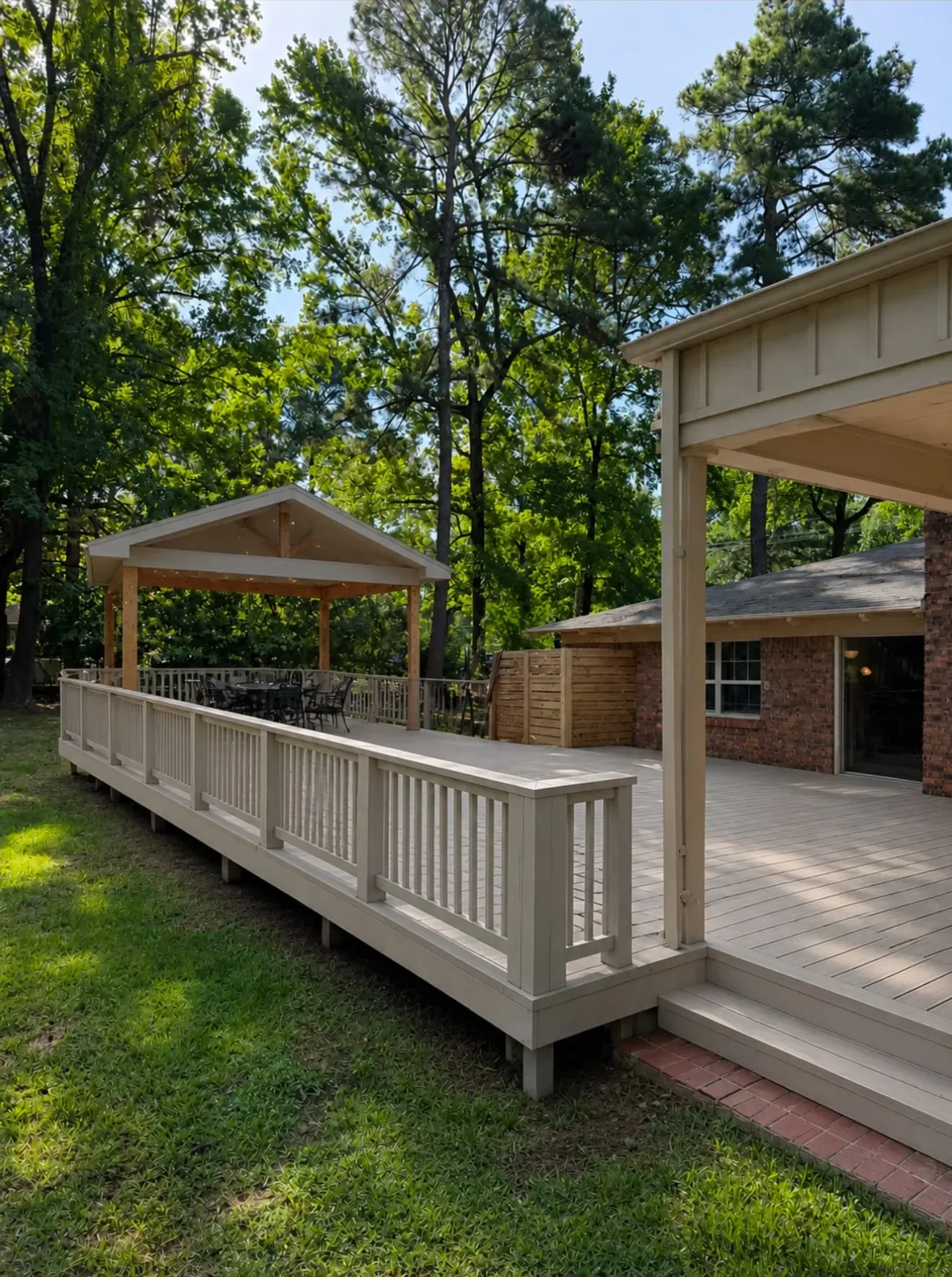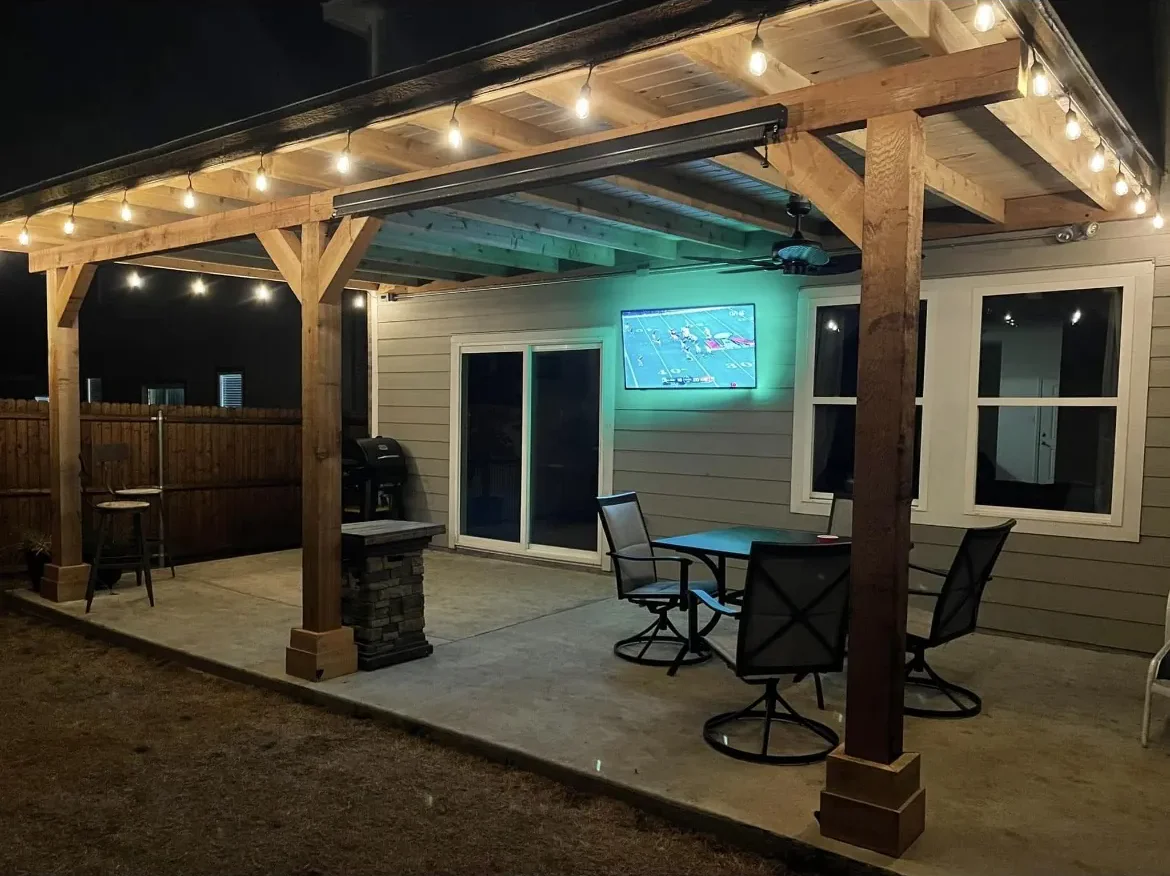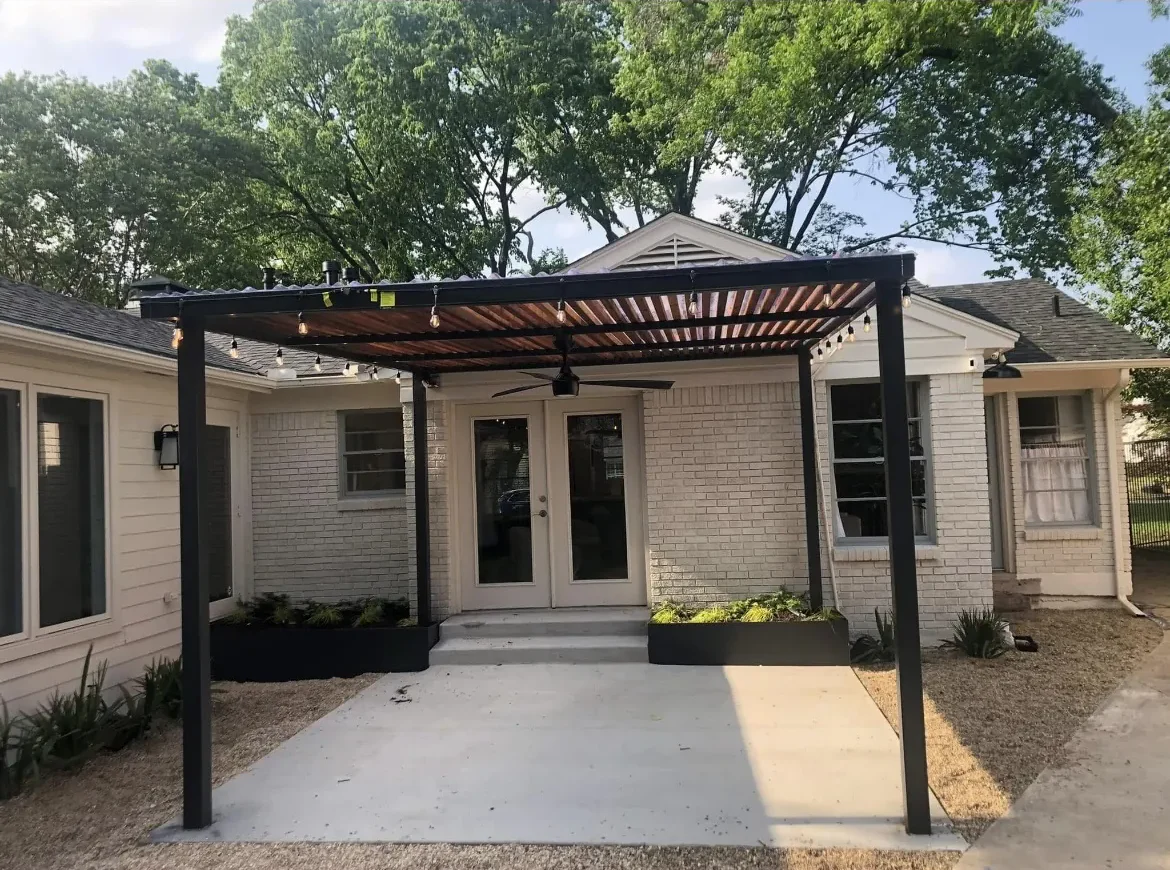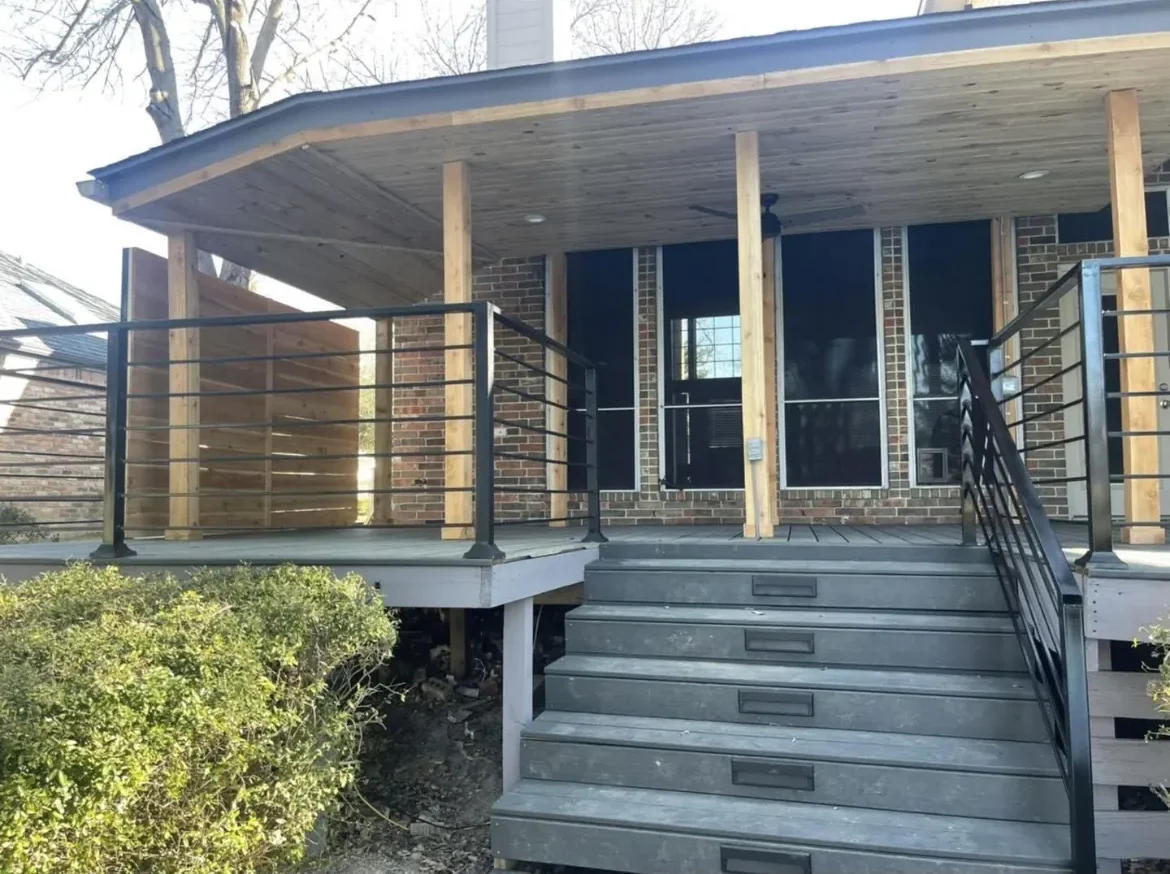
How much does a deck cost in McKinney, TX in 2026?
Most new decks in the Dallas area cost $15 to $30 per square foot installed in pressure-treated wood and $25 to $50 per square foot in composite, according to Block Renovation's 2026 Dallas-area guide. There is no 2026 price list for McKinney alone, so those regional figures are the best current guide. Height, stairs, railing and a cover are what move a McKinney deck up or down that range.
| Item | Typical cost | Source |
|---|---|---|
| Pressure-treated wood deck | $15 to $30 per sq ft installed (Dallas area) | Block Renovation, 2026 |
| Composite deck | $25 to $50 per sq ft installed (Dallas area) | Block Renovation, 2026 |
| Cedar deck | $19 to $29 per sq ft installed (national) | Fixr |
| Raised deck | $25 to $50 per sq ft (national) | Fixr |
| Stairs | $75 to $450 per stair (national) | Fixr |
| Metal railing | $45 to $85 per linear ft (national) | Fixr |
| Removing an old deck | $5 to $15 per sq ft (national) | Fixr |
| City permit, single-family addition or alteration line | $0.68 per gross sq ft | City of McKinney permit fee schedule |
Two examples from those numbers. A 300 sq ft deck comes to about $4,500 to $9,000 in pressure-treated wood and $7,500 to $15,000 in composite (calculated from Block Renovation's ranges). If the city permits it on the $0.68 line, the building permit for 300 sq ft is about $204 (calculated); McKinney measures an accessory structure from outside post to outside post, so the post layout on your plans sets that number. For resale, the 2025 Cost vs Value report for Dallas puts a wood deck addition at $15,841 with 99.8% of the cost recouped, and a composite deck at $23,519 with 92.1% recouped.
Our Frisco and McKinney deck cost guide compares older city-level price data side by side, and the Dallas deck cost guide breaks costs down by size. Archetex gives a written price after a free site visit, not a per-foot guess over the phone.
Do you need a permit to build a deck in McKinney?
Plan on one. Section 122-4 of McKinney's ordinance, quoted in the city's Residential Alteration packet, makes it unlawful to build, add to or structurally alter any building or structure without a permit. McKinney adopted the 2024 International Residential Code with amendments on October 1, 2025. The same packet says a detached structure under 120 sq ft with no electrical or plumbing doesn't need a building permit, but that won't cover a deck off the back door, which the city treats as part of the house.
What applying looks like in McKinney:
- The portal. The city's Home Repairs page sends accessory structures to the "Residential Alteration" permit. You search for it in the Citizen Self Service (CSS) portal's Application Assistant. The Development Navigation Assistant (DNA) portal gives a step-by-step guide first if you want one.
- The drawings. The packet asks for engineered framing plans when they apply to the project, covering post sizes, header spans, lumber sizes, flashing, footing details and connection details. Incomplete submittals are rejected.
- Inspections. The city says inspections on permitted work should be requested by the general contractor, through CSS. If rain leaves the site too wet and nobody canceled, the inspector issues a red tag and a $50 re-inspection fee.
- Work hours. Construction is allowed 6 a.m. to 9 p.m. on weekdays, 8 a.m. to 5 p.m. on Saturday and 1 p.m. to 5 p.m. on Sunday.
- Invoices. McKinney has warned of fake permit invoices. Real ones come only through CSS, and the city charges no "Application Approval Fee."
For how McKinney compares with Plano and Frisco on submittals and review, see deck permits in Plano, Frisco and McKinney.
Where can a deck go on a McKinney lot?
Whether the deck touches the house decides which rules apply. McKinney's Unified Development Code (UDC) lists decks as accessory structures, and says an accessory structure attached to the main building is an extension of it, under the same rules as the house. A freestanding deck follows the city's table for detached accessory structures:
| Detached deck size | Side and rear setback |
|---|---|
| 100 sq ft or less | 1 foot |
| 101 to 300 sq ft | 3 feet |
| 301 to 500 sq ft | 5 feet |
| Over 500 sq ft | The zoning district's setbacks |
The same table caps detached accessory structures at 12 feet tall, keeps them out of the front yard and behind the front face of the house, and says they can't be located in any easement. A corner lot follows the zoning district on the street side. Two more UDC rules catch people out. Where a filed plat sets a setback, the plat wins over the zoning number. And in front, a platform or slab can't project past the front setback more than 20 inches above the average grade, which limits a raised front porch deck.
Creek lots, floodplain and clay soil in McKinney
A lot that backs onto a creek has a line you can't build past. McKinney's UDC sets erosion hazard setbacks along streams and says no building, fence, wall, deck, swimming pool or other structure may be built inside them. Land that stays in the 100-year floodplain is dedicated as an easement, and accessory structures can't go in easements. Your plat and survey show where those lines fall, and they come first in the layout.
The ground is the other half of the job. Collin County lies almost entirely within the Blackland Prairie, according to the Handbook of Texas, with deep clayey soils across its central and western part. The USDA's description of Houston Black clay, the region's best-known soil, notes high shrink-swell potential and dry-season cracks up to 4 inches wide at 12 inches deep. Footings are sized and placed with that movement in mind, and our guide to deck footings in clay soil covers it in more detail. Call 811 before anyone digs; McKinney's Building Inspections page reminds homeowners of that for decks too.
Decks in the McKinney Historic District
A house in McKinney's Historic District needs one more approval. The city's Residential Alteration packet says any modification to the exterior of a building in the Historic District requires a Certificate of Appropriateness, and to call Historic Preservation at 972-547-2000. McKinney became a Certified Local Government with the National Park Service and the Texas Historical Commission in May 2025. Ask that office what it wants to see before the design is final. Archetex designs the deck around the house, its height and its materials, and can prepare the drawings for the application.
HOA approval for a deck in McKinney
If your home is in a master-planned community, expect HOA review before the permit. Block Renovation notes that master-planned communities with HOAs are common in McKinney. In Stonebridge Ranch, the association's October 2026 notice says a complete, first-time modification application costs nothing, while one filed after work has started costs $125. An expedited review is $125 and gives a decision within 10 business days. Rules on materials, colors and setbacks vary by HOA, and our guide to deck HOA approval in DFW shows what McKinney, Frisco and Plano associations actually ask for. Archetex can supply the drawings and material samples your HOA wants.
How Matthew builds a deck in McKinney
Every deck follows the same four steps, with the McKinney checks built in:
- Consultation and material selection. We walk the yard with your survey, mark the easements and setbacks, check the floor height at the door, and talk through how you'll use the deck.
- Footings and framing. Footings and framing are sized to the home's elevation and the deck's load, not a one-size prefab kit, and kept clear of any easement line.
- Decking and railing installation. Boards, stairs and railing go on, with the railing built to code from the start.
- Final walkthrough and cleanup, with care recommendations for the material you chose.
On materials, composite costs more up front and needs the least upkeep in full Texas sun. Pressure-treated pine costs least and needs regular sealing. Cedar sits between them on price. Archetex builds with all three, plus black metal railing, and will tell you which fits your yard and budget. Our composite vs cedar vs pressure-treated comparison goes deeper.
How to choose a deck builder in McKinney
Pick a builder who asks for your survey and your HOA's name before quoting a price. Then compare written quotes line by line. A good McKinney deck quote spells out:
- the deck's size, height and layout, and whether it is attached or freestanding;
- the decking, the framing lumber, and the footing count, size and spacing;
- the railing type and total length, and the stairs;
- who prepares the HOA or Certificate of Appropriateness drawings;
- who applies for the city permit, whether the fee is included, and who requests inspections;
- the schedule, payment stages and cleanup.
Homeowners who have reviewed Archetex mention daily communication, punctuality, help with design and a clean site. See our work, our questions to ask a deck contractor, and the McKinney service area page. We also build in Frisco and Plano, and our main Dallas deck builder page covers the full service. To start, send a photo of your back yard or call Matthew on (430) 318-6275.