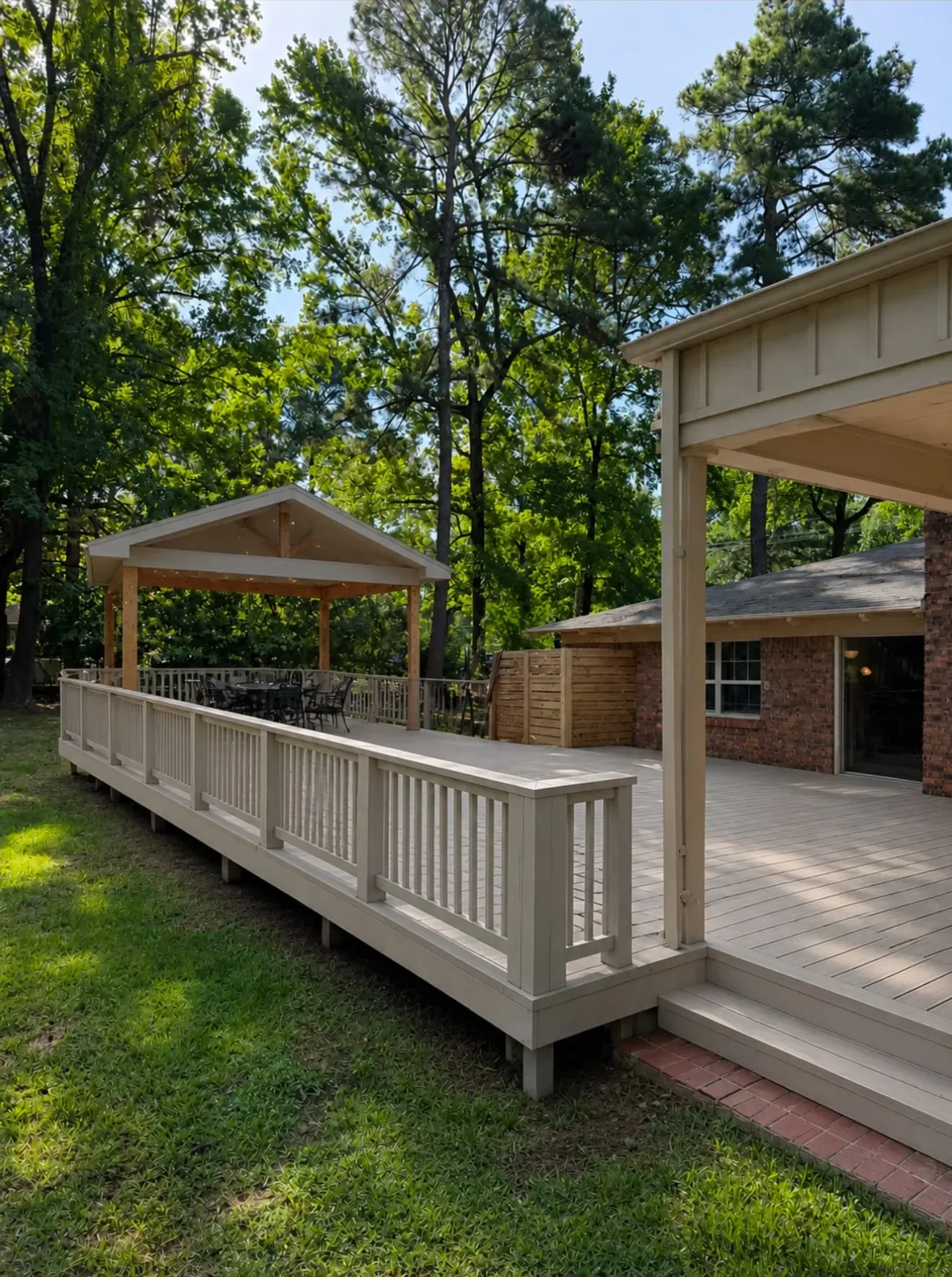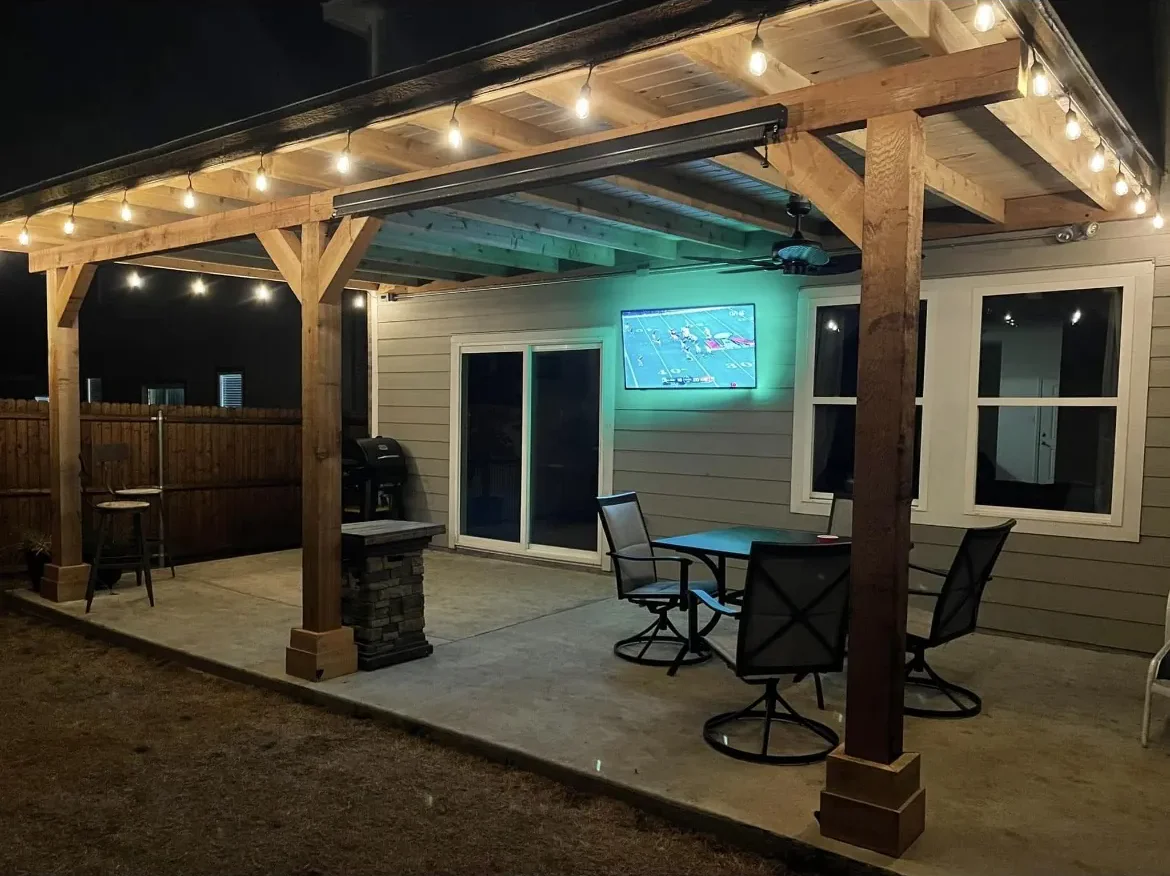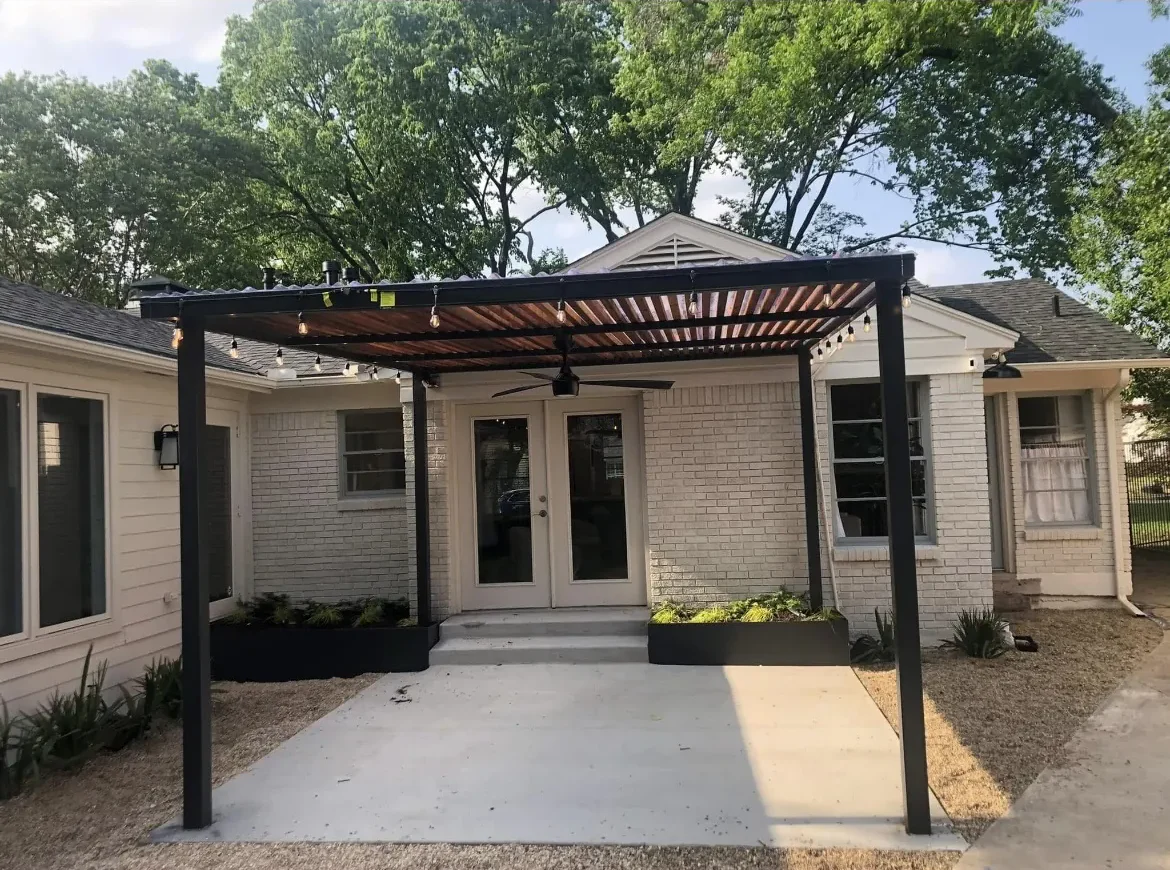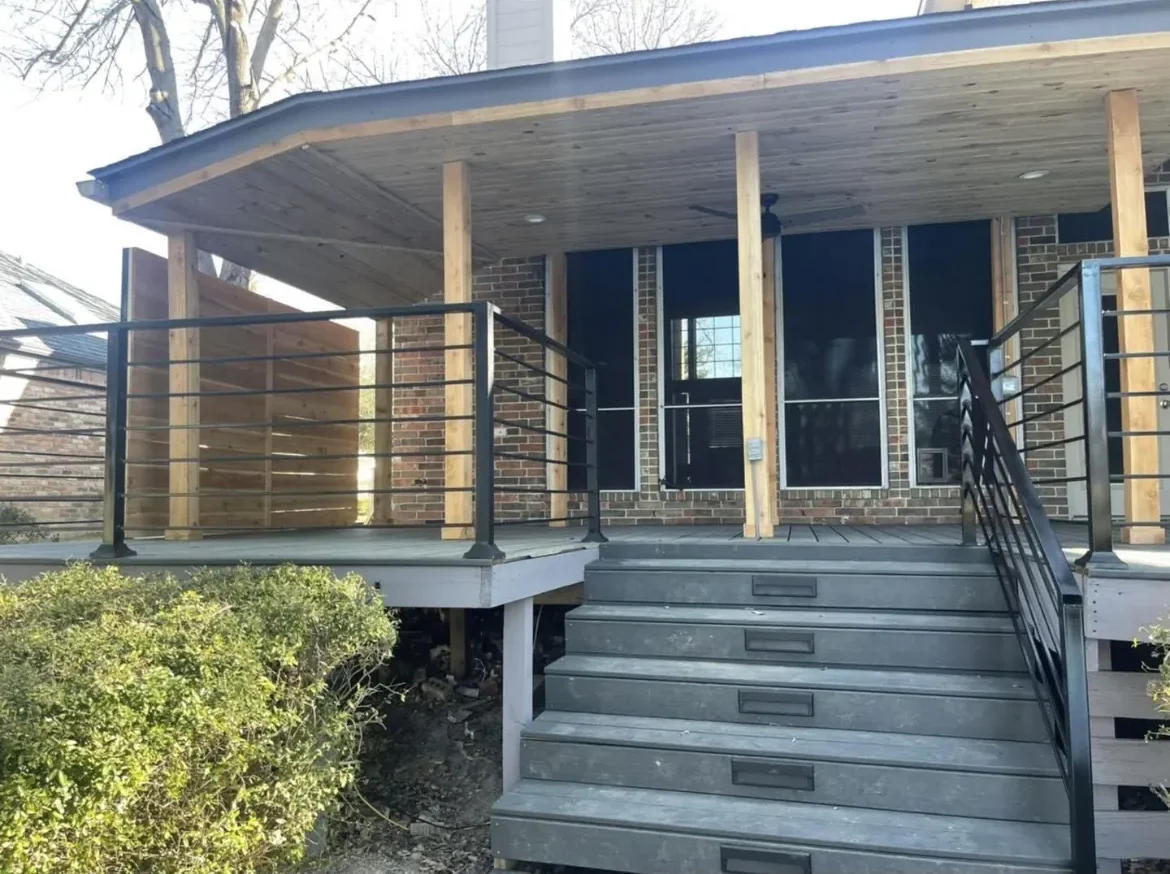
How much does a deck cost in Farmers Branch, TX in 2026?
A new deck in the Dallas area typically costs $15 to $30 per square foot installed in pressure-treated wood and $25 to $50 per square foot in composite, according to Block Renovation's 2026 Dallas-area guide. In Farmers Branch, many jobs replace an older deck, so the cost of tearing out the old one belongs in the budget too.
| Item | Typical cost | Source |
|---|---|---|
| Pressure-treated wood deck | $15 to $30 per sq ft installed (Dallas area) | Block Renovation, 2026 |
| Composite deck | $25 to $50 per sq ft installed (Dallas area) | Block Renovation, 2026 |
| Cedar deck | $19 to $29 per sq ft installed (national) | Fixr |
| Removing an old deck | $5 to $15 per sq ft (national) | Fixr |
| Replacing a deck of the same size, all in | $20 to $70 per sq ft (national) | Fixr |
| Stairs | $75 to $450 per stair (national) | Fixr |
| Metal railing | $45 to $85 per linear ft (national) | Fixr |
| City permit, addition or remodel line | $0.60 per sq ft, $50 minimum, plus $3 technology fee | City of Farmers Branch fee schedule, eff. Oct 1, 2021 |
As a worked example from Block Renovation's ranges, a 300 sq ft deck comes to about $4,500 to $9,000 in pressure-treated wood and $7,500 to $15,000 in composite. Removing an old deck of the same size adds roughly $1,500 to $4,500 on Fixr's figures (calculated). If the city permits the deck on its addition and remodel line, the fee would be about $183 (calculated). On resale, the 2025 Cost vs Value report for Dallas puts a wood deck addition at $15,841 with 99.8% of the cost recouped, and a composite deck at $23,519 with 92.1% recouped. For more detail, see our Dallas deck cost guide and deck cost by size guide. Archetex gives a written price after a free site visit.
Do you need a permit for a deck in Farmers Branch?
Plan on one. The city's list of residential projects that don't need a permit (October 1, 2025) doesn't include decks. The nearest exemption covers sidewalks and driveways no more than 12 inches above the adjacent grade and no larger than 100 sq ft. Permits go through Building Inspection at 13000 William Dodson Parkway (972-919-2549), or online through the city's Citizen Self Service portal.
What the city's remodels and additions guide asks for:
- Two copies of your property survey, dimensioned to show where the work goes and the setbacks, driveways and other flatwork, existing accessory structures and property pins;
- an electronic PDF of the plans as well as hard copies;
- dimensioned plans showing how it will be built, including foundation plans, elevations, materials and the spacing of framing members.
The guide says all construction must meet the International Residential Code as Farmers Branch has adopted and amended it, plus the city's Comprehensive Zoning Ordinance, which sets area and height rules. It lists foundation, framing and building final among the inspections. State law lets a homeowner do their own work on their homestead; the guide says any other person doing remodeling work must be registered as a contractor with the city. For how deck permits work across the area, see our Dallas deck and patio cover permit guide.
How the permit fee works in Farmers Branch
Farmers Branch charges by square foot, not by a flat deck fee. Its Residential Dwelling Permit Fee Schedule, effective October 1, 2021, sets addition and remodel construction at $0.60 per square foot, with a $50 minimum permit fee and a $3 technology fee on every application. There is no separate deck line, so confirm with Building Inspection which line your deck falls under. Two more details:
- The deposit. You pay a deposit when you apply. It is the whole permit fee if the fee is $1,000 or less, which covers almost any deck.
- Re-inspections. A failed inspection costs $50 to re-inspect the first time, then $100, $150 and $200 from the fourth time on. A builder who passes the first time saves you money.
Where can a deck go on a Farmers Branch lot?
Distance from the house decides the setback. The city's Residential Accessory Buildings guide splits structures into two groups:
| Rule | Attached, or 10 ft or less from the house | Detached, more than 10 ft from the house |
|---|---|---|
| Setbacks | Same front, side and rear setbacks as the house | 3 ft or more from side and rear lines, alley line or easement line |
| Height | No taller than the house it connects to | One story (14 ft) |
| Rear lot coverage | 50% maximum for all buildings in the rear yard | 50% maximum for all buildings in the rear yard |
| Open-air structures (pergolas, gazebos) | Up to 600 sq ft cumulative, depending on lot coverage | Up to 600 sq ft cumulative within approved lot coverage |
The guide is written for buildings like pergolas, gazebos and patio covers, and it doesn't name decks. If your deck has a pergola or cover on it, those rules apply to that structure, and the city's July 2026 submittal checklist asks for a survey showing easements and property lines, elevations, framing plans and a foundation plan with anchoring. For a plain deck, ask Building Inspection which rules it falls under before the design is final. The city's accessory building permit expires if work hasn't started within 180 days or stops for 180 days.
Creek lots, grading and clay soil in Farmers Branch
The city flags creek and flood plain lots for a closer look. Its accessory building application asks whether a lot is a corner lot, interior lot, creek lot (or other water) or flood plain lot. If the work changes existing grades, the city's infill lot grading instructions require a grading and drainage plan for Public Works review, with existing and proposed contours, spot elevations and flow arrows. Drainage must go to a street or a designated drainage alley or easement, and can't be diverted onto an adjacent property. Public Works returns comments within 7 business days, and a final grading survey is required at the end.
Under the deck, the soil is the other issue. North Texas Blackland Prairie clays such as Houston Black have high shrink-swell potential, and the USDA's soil description records dry-season cracks up to 4 inches wide at 12 inches deep. That movement is hard on the footings of an old deck, and it is why new footings are sized and placed with it in mind. See our guide to deck footings in clay soil.
Older homes, new decks: what Farmers Branch jobs look like
Much of Farmers Branch's housing went up in a short period. The Handbook of Texas records 13,441 residents in 1960 and 27,492 in 1970. A deck built then, or added in the decades since, has had a long run of Texas sun and clay movement, so many jobs start with taking an old one out. The city is also renewing its housing. Its Replacement Housing Program, funded with $2.5 million in federal money through Dallas County, replaces eligible homes in the Valwood Park neighborhood with new houses of up to 1,300 square feet. A new house next to an older one often means a fresh grade and a different door height, both of which the deck design has to meet.
Here is how Matthew runs a Farmers Branch deck:
- Consultation and material selection. We walk the yard with your survey, check the old deck if there is one, measure the door height, and talk through how you'll use the space.
- Footings and framing. Footings and framing are sized to the home's elevation and the deck's load, not a one-size prefab kit.
- Decking and railing installation. Boards, stairs and railing go on, with the railing built to code from the start.
- Final walkthrough and cleanup, with care recommendations for the material you chose.
On materials, composite costs more up front and needs the least upkeep. Pressure-treated pine costs least and needs regular sealing. Cedar sits between them. Archetex builds with all three and will tell you which fits the yard and budget. Our composite vs cedar vs pressure-treated comparison has the detail.
How to choose a deck builder in Farmers Branch
Pick a builder who asks for your survey, checks whether your lot is a creek or flood plain lot, and is registered with the city. A good written quote spells out:
- removal and disposal of the old deck, if there is one;
- the new deck's size, height and layout, and its distance from the house and property lines;
- the decking, the framing lumber, and the footing count, size and spacing;
- the railing type and length, and any stairs;
- who prepares the survey copies, plans and any grading plan, who applies for the permit, and whether fees are included;
- the schedule, payment stages and cleanup.
Homeowners who have reviewed Archetex mention daily communication, punctuality, help with design and a clean site. See our work, the Farmers Branch service area page for fences and patio covers, and questions to ask a deck contractor. Archetex also builds in Addison and Dallas, and our main Dallas deck builder page covers the full service. To start, send a photo of your back yard or call Matthew on (430) 318-6275.